
Amazon strategy · 10 minute read
Omnichannel in 2027: why a one-channel brand is now a risk, and how to add the next channel at a profit
Omnichannel has been a buzzword for a decade. We think that for a UK brand in 2027 it becomes plain risk management. Shoppers have split across Amazon, TikTok Shop and brands' own sites, AI assistants mostly cite reviewers and brands' own sites rather than marketplace listings, and one platform decision can stop most of your sales. Here is the evidence, what is live in the UK today, and how to add the next channel without losing money.

By Robert Prime, CEO and co-founder
Reviewed by Stephen Harrison, Account Director
- Published
- Last reviewed
- Sources
- 12 primary and labelled
Cover designed for Mr. Prime.
The short answer
Key takeaways
- Multichannel is selling in several places. Omnichannel is running them as one business, with one catalogue, one stock plan, one price position and one profit and loss.
- Shoppers have split: 28.8% of retail sales in Great Britain are online, and TikTok says almost a third of British online shoppers have bought on TikTok Shop.
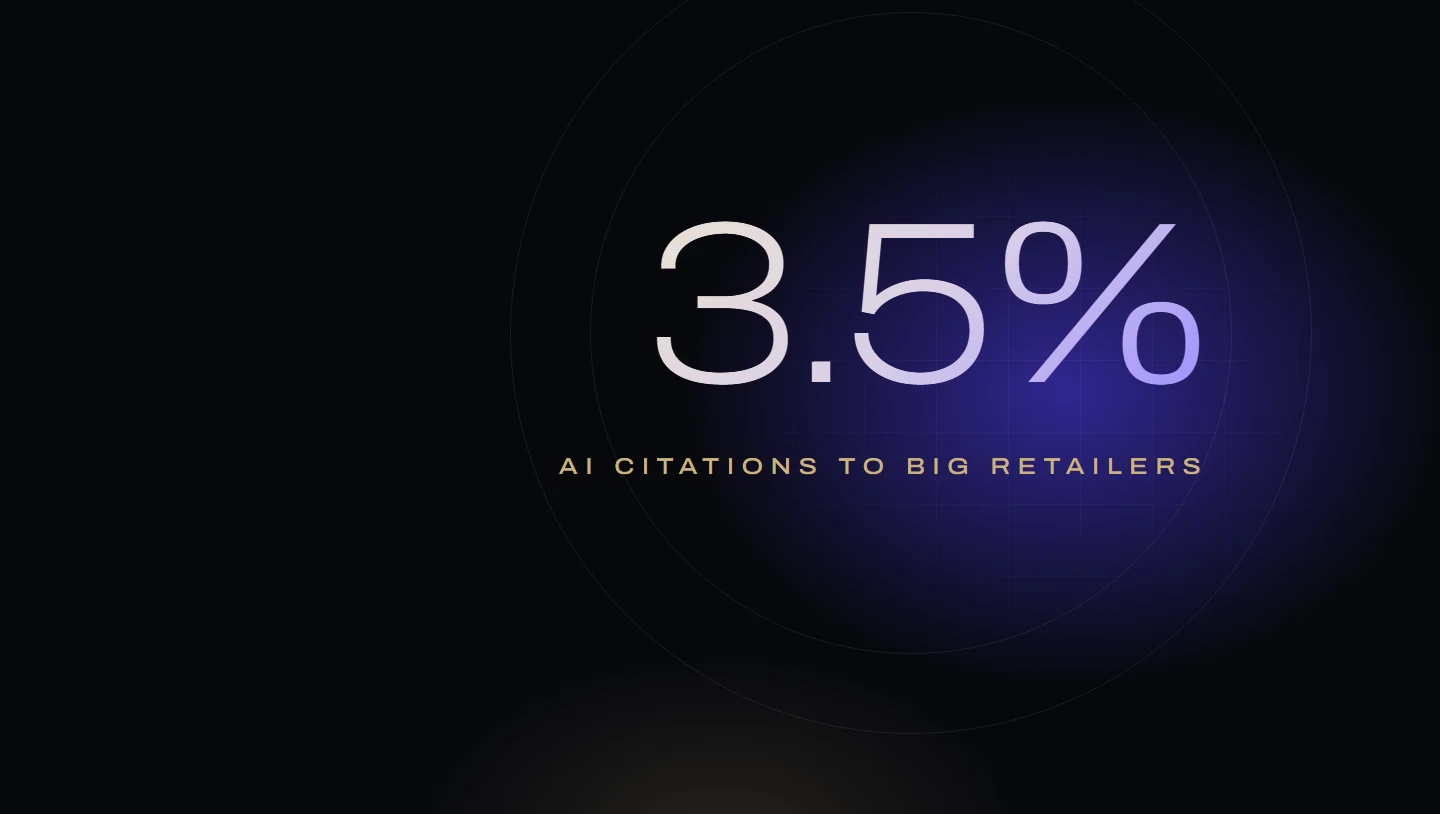
- ChatGPT, Claude and Perplexity build shopping answers mostly from reviewers, YouTube and brands’ own sites. In our study, big retailers including Amazon got 3.5% of citations. Amazon’s own assistant, Rufus, is the exception.
- Most AI checkout features are US-only today. Amazon’s Rufus is live in the UK; Google says its AI checkout comes to the UK later. Get your product data ready now.
- Add one channel at a time, chosen for your product, with its own profit target and a baseline to measure the knock-on effect on your other channels.
By the numbers
- 28.8%
- Share of retail sales in Great Britain made online, September 2026 (ONS)
- 31%
- British online shoppers who have bought on TikTok Shop, according to TikTok (NielsenIQ data)
- 3.5%
- Share of AI shopping citations that went to Amazon, Best Buy, Walmart and the other big retailers we counted, in our June 2026 study
- 300,000+
- Small businesses selling on TikTok Shop, according to TikTok, citing research by Public First
From Robert Prime and the Mr. Prime team, who run Amazon, TikTok Shop and Shopify for founder-led UK brands: £2.5m of ad spend across our client accounts in the last 12 months. Robert built and sold Shopify businesses before Mr. Prime.
“Omnichannel” has been on conference slides for over a decade, usually next to a picture of a happy shopper and a software logo. Most UK brands we meet have quite rightly ignored it. They sell mainly in one place, usually Amazon, and that place has worked.
For 2027 we think that changes, for reasons that have nothing to do with buzzwords. Shoppers have spread out. The AI assistants people are starting to shop with rarely cite Amazon listings. And when nearly all your sales come through one platform, that platform’s next decision is your biggest business risk. This guide sets out the evidence, what is actually live in the UK, and how to add a second channel without it costing you money.
One point first, because it matters most: omnichannel does not mean being everywhere. It means running the channels you are on as one business, and adding the next one only when it fits.
Multichannel and omnichannel are not the same thing
Multichannel means you sell in more than one place. Plenty of brands do that badly: an Amazon account, a Shopify store and a TikTok Shop, each run by someone different, with three sets of numbers and prices that undercut each other.
Omnichannel means the channels are run as one business:
- One catalogue, so every channel shows the same titles, facts and photos.
- One stock plan, so a TikTok spike never empties your Amazon stock.
- One price position, so no channel undercuts another. Amazon can withhold the Featured Offer from an offer priced above the same product elsewhere, as our Featured Offer guide explains.
- One profit and loss, with profit per order by channel, so budget follows profit.
That is how we run accounts, and our commerce flywheel page shows how the channels feed each other: TikTok creates demand, Amazon converts it, your own store keeps the customer.
Reason 1: your shoppers have already split up
The numbers that matter for a UK brand come from official sources and the platforms themselves:
- 28.8% of retail sales in Great Britain were made online in September 2026, according to the Office for National Statistics1. Online is no longer a side channel.
- 31% of British online shoppers have bought on TikTok Shop, says TikTok, quoting NielsenIQ data2. That is “almost a third”, from a platform that has only operated in the UK for five years.
- More than 300,000 small businesses now sell on TikTok Shop, and LIVE shopping has grown 55% year on year, says TikTok, citing research by Public First3.
- Amazon itself says “more than 95% of independent sellers in Amazon’s store sell across multiple channels”, and is building tools to help them do it4. That figure covers its sellers generally, not the UK alone, and the tools are for US sellers only, so far.
None of this means Amazon matters less. It means a growing share of your future customers first meet products somewhere else.
Reason 2: AI assistants rarely cite your Amazon listing
In June 2026 we asked ChatGPT, Claude and Perplexity 3,564 shopping questions about 99 products in 10 categories, and counted every source they cited. The full results are in our State of AI Product Visibility report.
Amazon.com came 62nd of 1,179 sites cited, with 0.3% of citations. Perplexity cited YouTube 1,472 times and never cited Amazon.com.
The lesson is uncomfortable for an Amazon-only brand. When a shopper asks ChatGPT, Claude or Perplexity “what’s the best air fryer?”, the answer is built mostly from reviewers, YouTube videos, forums and brands’ own websites, not from marketplace listings. The exception is Amazon’s own assistant, Rufus, which works inside Amazon and wasn’t part of our study. To be in those answers you need the things omnichannel gives you anyway: your own site with clear product facts, creator and video content, and products good enough for reviewers to recommend.
Three cautions about our own data. The study records the assistants’ answers as they stood in June 2026, and assistants change fast. Most of the sites cited were American, and the study wasn’t set to the UK. And we left eBay, Etsy and AliExpress out of every count. Read it as a strong signal about how assistants answer, not a permanent law.
Reason 3: AI checkout is coming, and it arrives in the US first
Shopping inside AI assistants is real, but most of it isn’t live in the UK yet. This is what each company says on its own pages, as of 25 October 2026:
| Feature | Live in the UK? | What the company says |
|---|---|---|
| Amazon’s Rufus shopping assistant | Yes | “Rufus is now available to all UK customers"8 |
| Alexa+ (shopping by voice) | Early access only | UK customers can try it “by joining our Early Access programme"9 |
| Alexa for Shopping | No, US only | “available to U.S. customers"10 |
| Shopping in ChatGPT | No, US only | “Shopping is currently live for ChatGPT users in the U.S.“6. OpenAI is also “moving away from a standalone Instant Checkout experience” towards checkout on merchants’ own sites6 |
| Selling in ChatGPT through Shopify | No, for sales to US buyers | Open to merchants “who sell to US buyers"5 |
| Google’s AI checkout | Not yet | Coming to Canada and Australia “in the coming months and later to the U.K.“7 |
So nobody can tell you exactly when these reach UK shoppers, and the checkout itself may well happen on your own site rather than inside the assistant. What we can tell you is what they will run on. Shopify says AI-driven traffic to its stores grew eight times year on year in the first quarter of 2026, and orders from AI-powered searches nearly 13 times5. Every one of these systems reads product data from somewhere: your Shopify catalogue, your Google Merchant Center feed, your Amazon listing.
Our view for 2027, and it is a view, not a vendor’s promise: at least some of these features will reach UK shoppers during the year. The brands that benefit will be the ones whose product facts are clean and identical on every channel before that happens. That is an omnichannel job.
Reason 4: one channel is one point of failure
The fourth reason is the oldest, and the one owners feel most. If 90% of your sales come through one platform, its rules, fees and algorithms set your profit, and one problem on your account can stop most of your income.
We see this on our calls. A brand we spoke to this year lost its best-seller for months over an authenticity complaint, starting just before Black Friday. When it came back, the ads had to relearn from scratch, and ran expensively while they did. Our account suspension guide covers what to do if it happens to you.
Fees move too, in both directions, and always by someone else’s decision. In 2026 Amazon cut some UK fees: the referral fee on Home Products up to £20 fell “from 15% to 8%“11, which on a £20 item is £3.00 down to £1.60, a saving of £1.40 a sale. From 2 November 2026 its fuel and logistics surcharge on fulfilment fees rises “from 1.5% to 2%”, and festive peak fulfilment fees apply to selected FBA orders in the UK from 15 October 2026 to 14 January 202712. Good or bad, a one-channel brand takes each change in full.
What omnichannel is not
Every channel added in a hurry costs money. We have seen each of these:
- The wrong product for the channel. We once pitched TikTok Shop to a brand whose products were, honestly, a long shot for short video. They didn’t go ahead with TikTok, and Amazon turned out to be the right channel for them.
- A channel nobody runs. One brand’s unmanaged TikTok Shop was flooded with free-sample requests from creators with few followers. It cost product and produced little.
- A cheaper price on your own site. If your website undercuts your Amazon price, Amazon can stop featuring your offer, so it drops off the main “Add to basket” button on your best channel. Check Pricing Health before you run a website sale.
- Three teams and three dashboards. Each channel looks good on its own report while the business as a whole stands still.
Which channel to add next
Add one channel at a time, chosen for where you are strong today.
| You sell mostly on | Add next | Why |
|---|---|---|
| Amazon | Your own website (usually Shopify) | Margin a marketplace would take, your own customer list, and the brand-site citations AI assistants use |
| Amazon, with a product that shows well on video | TikTok Shop | Creators reach shoppers who weren’t searching, and some of them then search for you on Amazon |
| Your own website | Amazon | If shoppers already search Amazon for what you sell, it converts demand you aren’t catching |
| TikTok Shop | Amazon | Viewers who don’t buy in the app often search for the brand on Amazon. Be there when they do |
Our guide to TikTok Shop versus Amazon works through that choice in detail.
Whichever you choose, give the new channel two jobs to pass: it must make a profit on its own numbers, and it must not damage the others. Measure the second one against a baseline. Compare branded searches and total sales on your main channel before and after, rather than trusting each channel’s own report. Our three-channel guide shows how to measure that, and how to keep pricing and stock in step, including sharing one pool of stock through Amazon’s Multi-Channel Fulfilment.
The profit test for the new channel
Work out profit per order on the new channel before you launch, from your own costs:
Profit per order
Price − VAT − channel fees − fulfilment − cost of goods − returns − marketing
Use the price the shopper pays. Channel fees include commission or referral fees; fulfilment includes postage or FBA; marketing includes ads, creator commission and samples.
Our two worked examples, on different products, show how differently the costs fall. A £20 Amazon sale left £5.14 after VAT, fees, stock and advertising, at October 2026 rates outside peak; there, fulfilment and stock were the big costs (Amazon fees guide). A £24.99 TikTok Shop order left £5.30; there, creators and ads together cost more than TikTok’s own commission (TikTok Shop fees guide). On your own website there is no marketplace fee, but you pay card fees and postage, and you pay to bring every visitor, through ads, email or creators. Run the sum with your own figures. If the new channel’s profit per order is thin and it doesn’t lift the old one, it isn’t worth the stock and the hours.
A 90-day plan for 2027
Adding your second channel
- Weeks 1 to 2One catalogue and one P&L: the same product facts everywhere, and profit per order by channel after fees, fulfilment and advertising.
- Weeks 3 to 4Choose the channel and 10 to 20 products for it, and write down the profit target and the baseline for your main channel.
- Weeks 5 to 8Launch, with one person accountable and stock planned for both channels.
- Weeks 9 to 12First read: profit on the new channel and the effect on the old one. Fix what is clearly broken; keep the final verdict for the next quarter.
Treat week 12 as a first read, not a verdict. New TikTok Shop sellers are paid 31 days after delivery, as our TikTok Shop fees guide explains, and a fair baseline for your main channel needs a comparable period. If someone else has to approve the spend, our one-page business case turns this plan into the numbers a finance director will sign.
Whether a second channel would pay for your products, and which one, is one of the questions a Profit Audit answers. How we measure shows how we work out every £.
Frequently asked questions
What is omnichannel ecommerce?
Is omnichannel worth it for a small brand?
Can UK shoppers buy through ChatGPT yet?
Will TikTok Shop take sales away from our Amazon listing?
Which channel should we add next?
Sources
- Retail sales, Great Britain: September 2026. Office for National Statistics, 23 October 2026. Checked 25 October 2026.
- Watch it, love it, want it: how TikTok is blending discovery, connection and commerce. TikTok Newsroom, 5 May 2026. Checked 25 October 2026.
- TikTok's discovery engine for growth boosts the British economy by £10bn. TikTok Newsroom, 15 July 2026. Checked 25 October 2026.
- Amazon Seller Central now supports multichannel selling across Amazon, eBay, Shopify, TikTok, and Walmart. Amazon (aboutamazon.com), 24 September 2026. Checked 25 October 2026.
- Agentic Commerce on Shopify: How It Works. Shopify, updated 18 June 2026. Checked 25 October 2026.
- Power product discovery in ChatGPT. OpenAI. Checked 25 October 2026.
- Introducing the Universal Cart and more ways to help you shop. Google, 19 May 2026. Checked 25 October 2026.
- How to use Amazon's AI tools to find the best deals and products for you. Amazon UK (aboutamazon.co.uk), 24 June 2025, updated 2 December 2025. Checked 25 October 2026.
- Introducing Alexa+ in the UK: The Next Generation of Alexa. Amazon UK (aboutamazon.co.uk), 19 March 2026. Checked 25 October 2026.
- Meet Alexa for Shopping, your personalized, agentic AI assistant on Amazon. Amazon (aboutamazon.com), 13 May 2026. Checked 25 October 2026.
- 2026 Updates to European Referral and Fulfillment by Amazon fees. Amazon (sell.amazon.co.uk). Checked 25 October 2026.
- FBA fulfilment fees. Amazon Seller Central Europe. Checked 25 October 2026.
How this guide was made
Written by Robert Prime and reviewed by Stephen Harrison at Mr. Prime, which runs Amazon, TikTok Shop and Shopify for UK brands. We used AI tools to help research and draft it; Robert edited it and takes responsibility for it. Every platform fact was read on the vendor’s own page, and the online share on the ONS page, on 25 October 2026. The AI citation figures come from our own study, published on this site. Where we say what we expect in 2027, we label it as our view.
Every figure above links to the primary source it came from, and we recheck them when Amazon changes its fees or definitions. Read our editorial standards. Spotted something wrong? Tell us through our contact page and we will correct it and note the change here.
About the author
Robert Prime
Robert has spent more than two decades building, growing and selling online businesses, including an Amazon brand he built and sold for seven figures.
His other exits include Telematics.com, sold to LexisNexis, and Remortgage.com. He co-owned UpDownDesk.com.au, growing it on Shopify alone from £12k to £350k a month before he exited, one of more than six Shopify businesses he has built and sold.
He sets and reviews the strategy for every Mr. Prime client, with the view of an operator who has sat on your side of the table.

Reviewed by
Stephen Harrison
Fourteen years a police officer, then his own Amazon brands. Now runs more client accounts than anyone, meticulously.
Your numbers, not ours
See your own break-even, TACoS and profit after ads.
The Profit X-Ray works it out from four monthly figures, or from your Business Report, in your browser.