
Amazon strategy · 12 minute read
What it really costs an established brand to launch on Amazon UK: a year-one budget
The fee on each sale is the cost everyone quotes, and in our worked example it is only about two-fifths of the year's spending. Here is the whole first-year budget for a brand that already sells through its own shop or to the trade: every fixed cost read from the vendor's own page, a month-by-month plan, the month it breaks even, and the cash you need before Amazon pays you.

By Robert Prime, CEO and co-founder
Reviewed by Stephen Harrison, Account Director
- Published
- Last reviewed
- Sources
- 15 primary and labelled
Cover designed for Mr. Prime.
The short answer
Key takeaways
- Budget the whole year, not the fee per sale. In our worked example Amazon’s fees on each sale are about 41% of the year’s costs; the rest is product cost, advertising, people, set-up and storage.
- The fixed set-up costs are small and published: £25 a month for the Professional plan, £205 for a one-class UK trade mark (£60 per extra class), £50 to £200 a year for GS1 UK barcodes for brands with turnover under £10m, and £0 to £140 per parent ASIN for Vine.
- Advertising and people are the big running costs you control. Plan launch ad spend that falls as a share of sales, and put a real number on the time your team will spend.
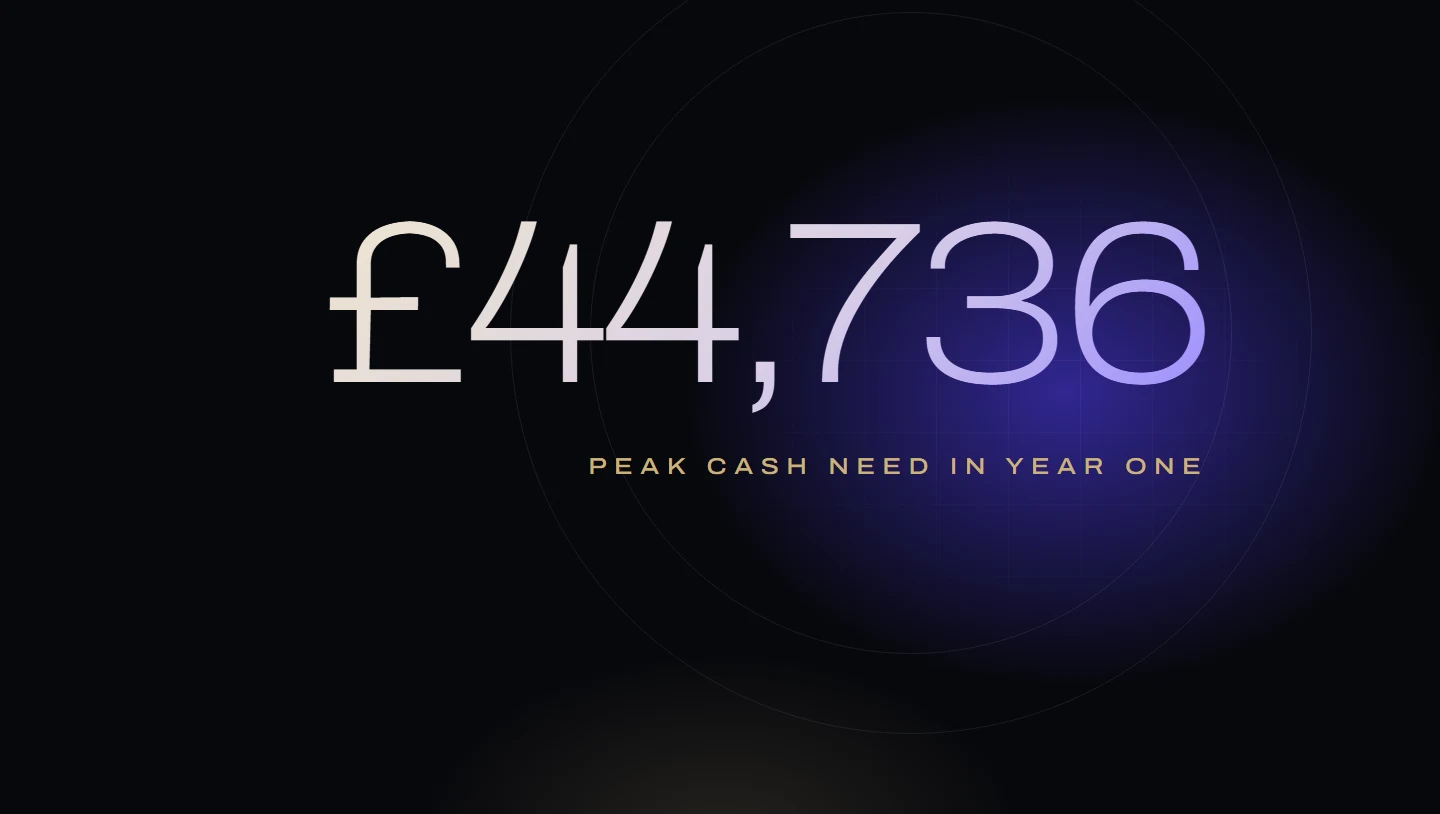
- Profit and cash are different questions. In the example the worst cumulative loss is £9,232, but the bank account needs £44,736, because stock is bought months ahead and Amazon holds a new seller’s payouts in reserve.
- Treat Amazon’s new seller incentives as upside you may qualify for, not as part of the base plan, and test the budget at half the sales before you commit.
By the numbers
- £44,736
- Peak cash need, in month 5 (worked example)
- Month 7
- When cumulative profit turns positive (worked example)
- £25
- Professional plan per month, excluding VAT (Amazon UK)
- £205
- UK trade mark application for one class, plus £60 per extra class (GOV.UK)
From Robert Prime and the Mr. Prime team, who manage Amazon advertising for founder-led UK and European brands: £2.5m of ad spend across our client accounts in the last 12 months. It is one of the first things a brand new to Amazon asks us for.
Ask what Amazon costs and most answers stop at the fee on each sale. Our seller fees guide takes a £20 sale (including VAT) apart line by line. A board needs a different number: what the first year costs, when it pays back, and how much cash leaves first.
A brand new to Amazon asked us for exactly that, and wanted to start with a short list of its best-sellers. Its questions were the ones every new brand asks: what will it cost to start, what might we sell each month, what will it cost to run, and should we build delivery into the price? This guide answers them, with every fixed cost from the vendor’s own page and a 12-month budget you can copy.
The three parts of a year-one budget
- Set-up costs, paid once or yearly: plan, trade mark, barcodes, images and A+, Vine.
- Running costs, paid monthly: advertising, storage and people’s time.
- The cost of each sale: landed product cost plus Amazon’s referral, digital services and fulfilment fees.
Stock and payout timing decide whether you can afford it; see the cash section.
Set-up costs: what each one costs today
The selling plan. “The Professional plan costs £25 (excl. VAT) per month no matter how many units you sell"1. The Individual plan costs £0.75 per unit sold instead1, but a brand that wants Brand Registry, advertising and Vine should budget for Professional: £300 a year.
A trade mark, for Brand Registry. Amazon describes Brand Registry as “a free programme”, and its requirement is a “pending or registered trademark for your brand name or logo"2. The cost is the trade mark. GOV.UK says: “It costs £205 to register a single trade mark in one class. It costs £60 for each additional class"3. Two classes cost £265, plus any lawyer’s fee; if you already own a UK mark, this line is zero. Our Brand Registry guide covers which marks Amazon accepts and how long each step takes.
Barcodes, if you need them. For most categories, Amazon says, “you are required to associate your products with industry-standard product identifiers”, and if a product has none “you can request an exemption"5. If you already sell to retailers, you probably have GS1 barcodes already. If you need them, GS1 UK sets the annual fee by turnover: £50 a year up to £99,999, £100 up to £499,999, £130 up to £999,999 and £200 for £1,000,000 to £9,999,999, with higher bands above that; “all prices exclude VAT"4.
Images and A+ content. Your own cost if you shoot in-house, or a quote if you don’t. Get it before you finalise the budget, for every product you launch.
Vine, for the first reviews. Amazon charges a one-off enrolment fee per parent ASIN: £0 for 1 to 2 units, £60 for 3 to 10 and £140 for 11 to 306. Amazon adds that it won’t charge the fee “if no reviews are received or if the first Vine review is published more than 90 days from the enrolment submission date”, and that “FBA and referral fees are applicable to Vine orders"6. So the real cost is the fee, the units and Amazon’s fees on them. Our Vine guide covers eligibility and when it pays back.
Running costs: the lines you control
Advertising. Amazon says “Sponsored Products campaigns have no monthly or upfront fees. You bid the maximum amount that you’re willing to pay when a shopper clicks an ad for your products"7. Plan it as a share of sales that starts high, while products have no reviews, and falls as conversion improves. Our product launch guide sets a 90-day launch budget from your margin.
Storage. For standard-size products in all categories except “Clothing and Accessories, Eyewear, Footwear, Rucksacks and Handbags”, the UK rate is £0.76 per cubic foot a month from January to September and £1.51 from October to December8. The storage utilisation surcharge only applies once your first shipment is more than 365 days old8, so it skips year one. See our FBA fees guide for the rate card.
People. Someone has to build the listings, run the advertising, plan stock and read the reports every week: a share of a salary in-house, or a fee for an agency or freelancer. If you are weighing an agency, our agency pricing guide shows how to test any quote.
Inbound shipping to Amazon’s warehouses is whatever your courier charges; the worked example folds it into the product’s landed cost so it can’t be forgotten.
The cost of each sale
Our seller fees guide covers this in depth, so here is just the unit the budget is built on: a £24.00 product that ships as a small parcel up to 400 g.
| VAT at 20% | £4.00 | 16.7% |
|---|---|---|
| Referral fee (15%) | £3.60 | 15.0% |
| Digital services fee (2%, rounded) | £0.13 | 0.5% |
| FBA fulfilment fee including the 2% fuel and logistics surcharge (from 2 November 2026), illustrative | £3.06 | 12.8% |
| Product cost, landed | £5.21 | 21.7% |
| Margin before advertising | £8.00 | 33.3% |
| Price the shopper pays | £24.00 | 100% |
Amazon’s 2026 non-peak fee for a small parcel up to 400 g is £3.0014. On top of that, “Starting 2 November 2026, the fuel and logistics-related surcharge will increase from 1.5% to 2%“13, so the fee becomes £3.00 × 1.02 = £3.06. Amazon says “most referral fees are between 8% and 15%“1, and that the UK digital services fee of 2% applies as a percentage increase to Selling on Amazon fees, including the referral fee, and to FBA fulfilment fees10. Here that is 2% × (£3.60 + £3.06) = £0.1332, which rounds to £0.13. So Amazon’s fees on this unit come to £3.60 + £3.06 + £0.13 = £6.79, and the product keeps £8.00 of its £20.00 price excluding VAT before any advertising. Run your own products through our FBA calculator for the UK.
One more fee to watch: festive peak fulfilment fees apply “from 15 October 2026 to 14 January 2027” for selected UK FBA orders13, which takes this small parcel from £3.00 to £3.1114. Amazon has not yet published a peak fee for 2027, so the example uses the non-peak fee all year. If a similar fee returns, add about 11p a unit, plus surcharge, from mid-October.
Should you build delivery into the price?
On Fulfilment by Amazon the answer is simpler than it is on your own website. Amazon says its fulfilment fees are “charged per unit sold, inclusive of packing, shipping, handling, customer service and returns"9. Delivery to the shopper is already in the £3.06 above. So the question is whether your Amazon price keeps your margin after that fee, and how it compares with your own site’s price plus delivery.
A worked 12-month budget
Here is the whole year for an illustrative brand (not the brand above). Every figure is invented except Amazon’s, GOV.UK’s and GS1’s fees.
The assumptions, so you can swap in your own:
- Sales: 300 units in month 3, rising to 1,200 a month from month 9. That is 9,300 units and £186,000 of sales excluding VAT over the year.
- Advertising: £2,500 a month in months 3 to 6, then £2,400 a month. That falls from 42% of sales in month 3 to 10% from month 9.
- Storage: an average of 2,000 units at 0.05 cubic feet each, which is 100 cubic feet, from month 2. At £0.76 that is £76 a month, and £151 in October to December at £1.518.
- Plan and people: £25 for the Professional plan1 plus £1,000 a month of in-house time (an invented figure, about a day a week). Total £1,025 a month.
- Set-up in month 1: trade mark in two classes £2653, GS1 barcodes in the £1m to £9.99m band £2004, and £4,000 for images and A+ content, a placeholder for your own cost or quote. Total £4,465.
- Vine in month 2: 10 units on each of eight parent ASINs is a £60 fee each6, so £480, plus 80 units at £12.00 each (£5.21 product cost and £6.79 of Amazon fees), so £960. Total £1,440.
| Month | Units sold | Margin before ads | Advertising | Storage | Plan and people | Set-up | Profit | Cumulative |
|---|---|---|---|---|---|---|---|---|
| 1 | 0 | £0 | £0 | £0 | £1,025 | £4,465 | −£5,490 | −£5,490 |
| 2 | 0 | £0 | £0 | £76 | £1,025 | £1,440 | −£2,541 | −£8,031 |
| 3 | 300 | £2,400 | £2,500 | £76 | £1,025 | £0 | −£1,201 | −£9,232 |
| 4 | 500 | £4,000 | £2,500 | £76 | £1,025 | £0 | £399 | −£8,833 |
| 5 | 700 | £5,600 | £2,500 | £76 | £1,025 | £0 | £1,999 | −£6,834 |
| 6 | 900 | £7,200 | £2,500 | £76 | £1,025 | £0 | £3,599 | −£3,235 |
| 7 | 1,000 | £8,000 | £2,400 | £76 | £1,025 | £0 | £4,499 | £1,264 |
| 8 | 1,100 | £8,800 | £2,400 | £76 | £1,025 | £0 | £5,299 | £6,563 |
| 9 | 1,200 | £9,600 | £2,400 | £76 | £1,025 | £0 | £6,099 | £12,662 |
| 10 | 1,200 | £9,600 | £2,400 | £151 | £1,025 | £0 | £6,024 | £18,686 |
| 11 | 1,200 | £9,600 | £2,400 | £151 | £1,025 | £0 | £6,024 | £24,710 |
| 12 | 1,200 | £9,600 | £2,400 | £151 | £1,025 | £0 | £6,024 | £30,734 |
| Year | 9,300 | £74,400 | £24,400 | £1,061 | £12,300 | £5,905 | £30,734 |
For the year: £74,400 − £24,400 − £1,061 − £12,300 − £5,905 = £30,734.
When do we break even?
Monthly break-even is the first month with a profit; cumulative break-even is when the running total turns positive. Here monthly profit turns positive in month 4, the second month of sales, and cumulative profit turns positive in month 7, when £4,499 of profit more than covers the £3,235 still to recover. The worst point on the profit budget is −£9,232, at the end of month 3.
Where the year’s money goes
| Cost line | Year one | Sum |
|---|---|---|
| Amazon fees on each sale | £63,147 | 9,300 × £6.79 |
| Product cost of units sold | £48,453 | 9,300 × £5.21 |
| Advertising | £24,400 | 4 × £2,500 + 6 × £2,400 |
| People (illustrative) | £12,000 | 12 × £1,000 |
| Images and A+ (placeholder) | £4,000 | your own cost or quote |
| Vine | £1,440 | £480 fees + £960 units |
| Storage | £1,061 | 8 × £76 + 3 × £151 |
| Professional plan | £300 | 12 × £25 |
| Trade mark, two classes | £265 | £205 + £60 |
| GS1 barcodes | £200 | one year, £1m to £9.99m band |
| Total costs | £155,266 | |
| Sales excluding VAT | £186,000 | 9,300 × £20.00 |
| Profit | £30,734 | £186,000 − £155,266 |
Amazon’s fees on each sale are £63,147 of £155,266, about 41% of the year’s costs. A budget built from the fee per sale alone looks far healthier than the year turns out.
Test it at half the sales
Halve every month’s units: margin before ads falls to £37,200, and the year becomes £37,200 − £24,400 − £1,061 − £12,300 − £5,905 = −£6,466. That is with advertising unchanged; cutting advertising when sales fall short closes much of the gap, because every pound not spent comes straight off the loss. Write that rule down before launch, with the month you will review it.
Cash: why the bank account needs more than the budget
The bank account tells a different story from the profit budget, for two reasons.
Stock is paid for months before it sells. In this example the brand pays for its first 3,000 units (£15,630 at £5.21 landed) in month 1, and for reorders of 4,000 units (£20,840) in months 5 and 8, so that stock arrives before each order runs out.
Amazon pays you after delivery, and holds a new seller’s money longer. Amazon’s standard reserve is “seven days after delivery date”, and “if you have just started selling, it is normal for all of your funds to be held in reserve"12. To keep the sum simple, the table assumes each month’s sales reach your bank the following month, at £13.21 a unit: the £20.00 price excluding VAT less £6.79 of Amazon fees.
| Month | Money in from Amazon | Stock paid | Ads, storage, plan and people, set-up | Cash flow | Cumulative cash |
|---|---|---|---|---|---|
| 1 | £0 | £15,630 | £5,490 | −£21,120 | −£21,120 |
| 2 | £0 | £0 | £2,541 | −£2,541 | −£23,661 |
| 3 | £0 | £0 | £3,601 | −£3,601 | −£27,262 |
| 4 | £3,963 | £0 | £3,601 | £362 | −£26,900 |
| 5 | £6,605 | £20,840 | £3,601 | −£17,836 | −£44,736 |
| 6 | £9,247 | £0 | £3,601 | £5,646 | −£39,090 |
| 7 | £11,889 | £0 | £3,501 | £8,388 | −£30,702 |
| 8 | £13,210 | £20,840 | £3,501 | −£11,131 | −£41,833 |
| 9 | £14,531 | £0 | £3,501 | £11,030 | −£30,803 |
| 10 | £15,852 | £0 | £3,576 | £12,276 | −£18,527 |
| 11 | £15,852 | £0 | £3,576 | £12,276 | −£6,251 |
| 12 | £15,852 | £0 | £3,576 | £12,276 | £6,025 |
So the brand needs £44,736 of cash at its lowest point, in month 5, nearly five times the worst point on the profit budget. The month 8 reorder dips it again, but not below that. At the end of the year the profit budget shows £30,734 and the bank £6,025. The £24,709 gap is real money still in the business: £8,857 of unsold stock (11,000 units bought for sale, 9,300 sold, at £5.21; the 80 Vine units were bought and given away in month 2) and £15,852 of December sales not yet paid out. VAT timing is left out for simplicity; your accountant will want it in.
Take this number to the bank or the board, alongside the profit budget. Our one-page business case template shows how to present both, with stop rules.
What we left out, on purpose
Amazon’s new seller incentives. New sellers who complete Brand Registry before or within six months of listing their first offer, and who are the first selling partner with a brand representative role for the brand, can get a New Brand Bonus: a referral-fee discount of “10% on the first £40,000” of eligible branded sales and “5% on the next £760,000"11. Amazon says it “is calculated on the final item price (including VAT/taxes)“11. Here £186,000 of sales is £223,200 including VAT, so the bonus would be worth 10% × £40,000 + 5% × £183,200 = £13,160 over the year.
New branded products sent to FBA may also qualify for the New Selection Programme (2026), with fee discounts and free storage on the first 200 units15. The two referral discounts don’t stack: Amazon says the sales discount “may not stack with other bonuses or rebates offered by Amazon, including the New Selection bonus, but you will be awarded with the more favourable bonus"11. We leave both out of the base budget: confirm eligibility first, because a plan that only works with a credit is fragile.
Returns and refunds. They vary too much by product to invent a rate; start from your own website’s return rate.
How to build your own
Build the budget in this order
- Choose the rangeYour proven best-sellers, not the whole catalogue.
- Price each productWork out the margin before advertising per unit with the FBA calculator.
- Forecast units by monthStart low and write down why each step rises.
- Add set-up costsPlan, trade mark, barcodes, images and A+, Vine.
- Add running costsAdvertising, storage and people’s time.
- Find break-evenMonthly and cumulative, then test the plan at half the sales.
- Draw the cash lineStock payments and payout timing give your peak cash need.
The first step matters most. In our view, an established brand should launch the few products that already earn most of its sales elsewhere, prove them on Amazon, and then widen the range: fewer images to pay for, fewer Vine enrolments, less stock tied up, and advertising spent on products that can win. Our guide to selling on Amazon UK as an established brand covers the profit model for each product and the channel questions that come with it.
Frequently asked questions
How much does it cost to launch a brand on Amazon UK in the first year?
What are the set-up costs of selling on Amazon UK?
When will we break even on Amazon?
How much cash do we need to start selling on Amazon?
Should we build delivery costs into our Amazon price?
Do we need GS1 barcodes to sell on Amazon UK?
Sources
- Amazon FBA Calculator | Check Fees & Profits for UK Sellers (selling plans and referral fees). Amazon UK (sell.amazon.co.uk). Checked 26 October 2026.
- Amazon Brand Registry: Protect and Build Your Brand in the UK. Amazon UK (sell.amazon.co.uk). Checked 26 October 2026.
- Register a trade mark: Apply to register a trade mark. GOV.UK. Checked 26 October 2026.
- How much does GS1 UK membership cost?. GS1 UK, last reviewed 19 January 2026. Checked 26 October 2026.
- Find your product ID (GTIN). Amazon Seller Central UK. Checked 26 October 2026.
- Vine enrolment fee for sellers. Amazon Seller Central UK. Checked 26 October 2026.
- Sponsored Products – Help increase product sales. Amazon Ads. Checked 26 October 2026.
- Monthly storage fees. Amazon Seller Central UK. Checked 26 October 2026.
- Amazon FBA: Optimise your Order Fulfilment in the UK. Amazon UK (sell.amazon.co.uk). Checked 26 October 2026.
- 2026 Digital services fee changes. Amazon Seller Central UK. Checked 26 October 2026.
- New Seller Incentives. Amazon Seller Central UK. Checked 26 October 2026.
- Payments based on delivery date. Amazon Seller Central UK. Checked 26 October 2026.
- FBA fulfilment fees. Amazon Seller Central UK. Checked 26 October 2026.
- 2026 Festive season peak fulfilment fee. Amazon Seller Central UK. Checked 26 October 2026.
- New Selection Programme - 2026. Amazon Seller Central UK. Checked 26 October 2026.
How this guide was made
Written by Robert Prime and reviewed by Stephen Harrison at Mr. Prime, which plans and runs Amazon launches for UK brands. We used AI tools to help research and draft it; Robert edited it and takes responsibility for it. Every Amazon fee and rule was read on Amazon’s own UK pages on 26 October 2026, the trade mark fee on GOV.UK and the barcode fee on GS1 UK’s own price page, on the same day. The worked examples use invented figures and say so.
Every figure above links to the primary source it came from, and we recheck them when Amazon changes its fees or definitions. Read our editorial standards. Spotted something wrong? Tell us through our contact page and we will correct it and note the change here.
About the author
Robert Prime
Robert has spent more than two decades building, growing and selling online businesses, including an Amazon brand he built and sold for seven figures.
His other exits include Telematics.com, sold to LexisNexis, and Remortgage.com. He co-owned UpDownDesk.com.au, growing it on Shopify alone from £12k to £350k a month before he exited, one of more than six Shopify businesses he has built and sold.
He sets and reviews the strategy for every Mr. Prime client, with the view of an operator who has sat on your side of the table.

Reviewed by
Stephen Harrison
Fourteen years a police officer, then his own Amazon brands. Now runs more client accounts than anyone, meticulously.
Your numbers, not ours
See your own break-even, TACoS and profit after ads.
The Profit X-Ray works it out from four monthly figures, or from your Business Report, in your browser.