
Amazon strategy · 9 minute read
Amazon Transparency and Project Zero: what they do in the UK, what they cost and whether you need them
Transparency stops fakes before they are listed; Project Zero lets you remove them yourself. Neither touches a reseller selling your genuine product. Here is what each programme does in the UK, who qualifies, what it costs per unit, and how to decide whether it pays for your brand.

By Robert Prime, CEO and co-founder
Reviewed by Atouka Tsochataridis, Growth Director
- Published
- Last reviewed
- Sources
- 8 primary and labelled
Cover designed for Mr. Prime.
The short answer
Key takeaways
- Transparency prevents counterfeits at the unit level: once a product passes Amazon’s 98% accuracy review, every unit sold on Amazon needs a valid code, whoever sells it.
- Project Zero is free self-service removal of counterfeit listings. You need a registered trade mark, a record of accurate reports, and you must keep 99% accuracy to keep access.
- Transparency needs an active, registered trade mark and a GTIN for each product, and you must code every unit you make, not just the units bound for Amazon.
- Amazon publishes US code prices from $0.05 down to $0.01 per code by volume, but no UK price. Model your own cost per Amazon unit before you enrol.
- Neither programme removes a reseller selling your genuine, unaltered product. That is a distribution question, not an IP one.
By the numbers
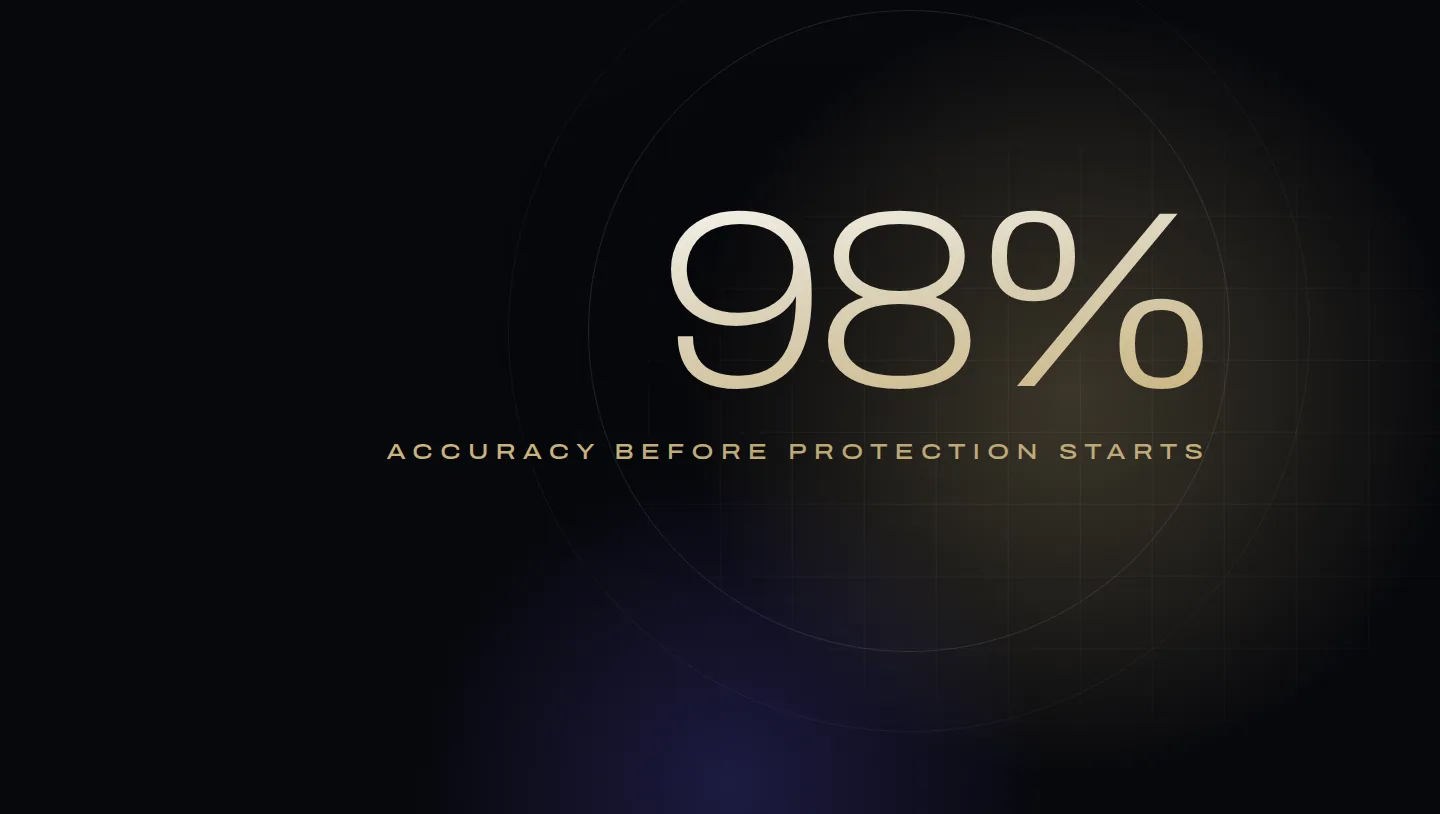
- 98%
- Accuracy a product must reach in Transparency's operational review before protection starts
- 99%
- Accuracy rate brands must keep to retain access to Project Zero
- $0.05
- Amazon's published US price per Transparency code for the first 1 million codes a year; no UK price is published
- 17.5p
- Transparency cost per unit sold on Amazon when Amazon takes 40% of production (illustration)
From Robert Prime and the Mr. Prime team, who set up Brand Registry, report infringements and plan brand protection for UK brands and manufacturers selling on Amazon.
Counterfeits on Amazon cost a brand twice: the sale goes to the faker, and the review the disappointed customer leaves lands on your listing. Amazon offers two programmes to deal with them on top of Brand Registry. Transparency stops fakes before they are listed or shipped. Project Zero gives you the power to remove them yourself. This guide explains what each does in the UK, who qualifies, what they cost per unit, and how to decide whether they are worth it for your brand. Both sit on top of Brand Registry, which our UK Brand Registry guide covers from trade mark to enrolment.
What each programme does in the UK
Amazon’s own figures give a sense of scale. In its Trustworthy Shopping Experience Report, published in April 2026, Amazon says its proactive controls blocked more than 99.9% of suspected infringing listings before a brand had to report them, and that it seized and disposed of more than 15 million counterfeit products worldwide in 20256. The tools below are for what gets through, and for the brands that want prevention rather than detection.
| What it does | Who acts | Cost | Available in the UK | |
|---|---|---|---|---|
| Brand Registry | The foundation: listing control, brand tools and automated protections4 | Amazon, automatically | Free | Yes4 |
| Report a Violation | Report suspected IP infringement; each report helps strengthen automated protections4 | You report, Amazon decides | Free | Yes4 |
| Project Zero | Search for counterfeit listings and remove them immediately, yourself3 | You remove, Amazon monitors accuracy | Free3 | Yes3 |
| Transparency | A unique code on every unit; units without a valid code can’t be listed or shipped1 | Amazon checks every unit | Per code1 | Yes1 |
Transparency is available in 10 countries including the UK, and Amazon says more than 90,000 brands have enrolled and more than 2.7 billion units have been protected1. Project Zero is available in more than 20 stores, the UK among them3.
How Transparency works
Each Amazon-issued Transparency code is a unique, non-sequential code printed as a small square barcode on the packaging, and Amazon keeps a record of every code and the product it was made for1. You can apply codes as labels, design them into the packaging, or, in the UK, connect your own existing serial codes instead1.
Getting a product protected
- EnrolLog in to the Transparency portal with your Brand Registry credentials and enrol the brand and products.
- Choose how to codeAmazon-issued codes on labels, Amazon-issued codes in the packaging design, or your existing serial codes.
- Code the unitsOrder and download codes, then print and apply them in house or through a Transparency service provider.
- Pass the operational reviewStart shipping coded units. Protection only switches on once the product passes Amazon’s review at 98% accuracy.
- Run with protection onEvery unit now needs a valid code. Codes are scanned on arrival at Amazon’s warehouses, or provided by sellers who fulfil orders themselves.
Amazon’s UK page describes each step1. The operational review is not needed if you connect existing serial codes, and protection “isn’t active until after a product passes the operational performance review with 98% accuracy"1. After that, all units must carry a valid code, and a code is required each time a new offer is created1. Sellers who fulfil their own orders provide codes when they confirm each order; FBA units are scanned when they arrive1.
What it stops goes beyond fakes. Amazon says Transparency checks can block authentic products that differ in “materials, compatibility, colour or language”, or that are made for other countries’ stores1. For a UK brand whose products are also sold cheaper abroad, that matters. Protection is global: once enabled, it applies in every country where Transparency has launched1.
Brands using Amazon-issued codes also get a Transparency badge on the product page, and customers can scan the code with the Amazon Shopping or Transparency app to check it is genuine. Brands connecting their own serial codes don’t get those two benefits1.
How Project Zero works
Project Zero combines Amazon’s automated protections with a self-service tool. You search for counterfeit listings and remove individual offers or whole listings, and each removal also teaches Amazon’s automated protections3. You get access to the tool in each store where your brand has an active, registered trade mark linked to Brand Registry3.
The responsibility is real. Amazon says the tool “should only be used to remove counterfeit listings”, and defines a counterfeit as an unlawful reproduction of a registered trade mark, or a very similar mark, used to imply the product is genuine3. Brands “must maintain an accuracy rate of at least 99% in order to maintain access to Project Zero"3. Amazon recommends a test buy before you remove a suspected fake, and sends a notice of complaint to each seller affected by a removal3.
Amazon’s position is consistent across its pages: breaches of exclusive or selective distribution agreements “do not constitute intellectual property rights infringement”, and it won’t help enforce them5. Nor can you impose a resale price on resellers: the CMA treats limiting a reseller’s ability to advertise lower prices online as a form of resale price maintenance8. Our Amazon Buy Box guide explains what does work against undercutting resellers, and Amazon for manufacturers covers distribution agreements.
Who is eligible
The two programmes ask for different things, and neither is automatic.
| Requirement | Transparency | Project Zero |
|---|---|---|
| Brand Registry role | Rights owner1 | Rights owner of a registered trade mark3 |
| Trade mark | Active and registered; pending is not enough1 | Registered, and active in each store where you use the tool3 |
| Product data | A GTIN for each product you enrol1 | None |
| Track record | None | Report a Violation used for trade mark infringement in the last six months, with at least a 90% acceptance rate, and a history of using Brand Registry within Amazon’s policies3 |
| Operational commitment | Code every unit you make, wherever it is sold (Amazon-issued codes)1 | Complete a 10-minute training on enrolment3 |
For existing serial codes, Amazon also asks for unique codes 7 to 20 characters long for every unit of a GTIN or SKU, printed as scannable 1D, QR or 2D barcodes on the same side of the packaging as the GTIN, and the ability to share all serial numbers with Amazon1.
Two points catch brands out. First, a pending trade mark gets you into Brand Registry but not into Transparency14. Second, a 90% acceptance rate is necessary but not sufficient for Project Zero: Amazon reviews other criteria and invites brands automatically once they qualify3. In our experience the fastest route in is a steady record of precise, well-evidenced reports, rather than a large volume of them.
What Transparency costs
In the UK, Amazon does not publish a price per code. Its UK page says only: “We charge for Amazon-issued codes and for existing serial codes that you share with us. We offer discounts based on volume.” There are no enrolment or subscription fees, no minimums per order and no charge for adding or removing products1.
In the US, Amazon publishes its prices: $0.05 per code for 1 to 1,000,000 codes, $0.03 from 1,000,001 to 10,000,000, and $0.01 above that, with the volume tier resetting each year on the anniversary of your account2. We don’t convert these into a UK price, because Amazon doesn’t. Get your quote from the Transparency portal.
The code is not the only cost. Budget for:
- Labels and printing, or packaging artwork changes if you design codes in.
- Application: labour on the line or in the warehouse, or a service provider.
- Every unit, not just Amazon’s. To use Amazon-issued codes you need “the ability to add codes to every unit you manufacture, regardless of where the units are sold"1. If Amazon is a small share of your production, the cost per Amazon sale rises sharply.
Cost per unit against what it protects
The right question is not “what does a code cost?” but “what does protection cost per unit I sell on Amazon, and how many lost sales does that need to prevent?”
Transparency cost per Amazon unit
(Code + label + application) × units made ÷ units sold on Amazon
Annual cost of codes, labels and application for every unit made, spread over the units sold on Amazon.
Read it two ways. If counterfeits or wrong-version units are visibly taking more than about 3% of your Amazon sales, or dragging down reviews and inflating returns, Transparency is cheap. If Amazon is a small share of a high-volume, low-price range with no counterfeit problem, the same programme is a tax on every unit you make. Enrol the products that are copied, not the whole catalogue: Amazon lets brands choose which products to serialise3.
The protection also reaches the Featured Offer. Amazon names authenticity, product condition and complaints such as “different product version” among the things it weighs in seller performance7. Removing fake and wrong-version offers protects both the sale and the listing’s reputation. Our Amazon Buy Box guide covers the rest of that picture.
How they fit with Brand Registry
Think of the three as layers, each needing the one below.
- Brand Registry is the base. It gives you listing control, Report a Violation and the automated protections Amazon runs for every registered brand4. Our UK Brand Registry guide covers the trade mark, the timeline and enrolment.
- Project Zero adds speed. After six months of accurate reporting, you can remove counterfeits yourself instead of waiting for each report to be reviewed3.
- Transparency adds prevention. For the products that are copied, units without a valid code never reach a customer1.
Amazon itself says the brands that combine Project Zero with Transparency “see the best results"3. In the accounts we manage, the order of work is usually: register the trade mark and enrol in Brand Registry; report infringements carefully for six months; then decide product by product whether serialisation is worth its cost per unit.
A checklist before you enrol
- Is your trade mark registered, not just pending? Transparency needs it1.
- Do you have a GTIN for each product you want to protect1?
- Can your factory or warehouse code every unit, including those sold elsewhere?
- What share of your production does Amazon take, and what is the cost per Amazon unit?
- Which products are actually being copied, or arriving in the wrong version?
- Who on your team will run Report a Violation and keep accuracy high enough for Project Zero?
If the problem is genuine stock sold cheaply rather than fakes, none of these tools will fix it. Start with Amazon for manufacturers and the reseller section of our Buy Box guide.
Frequently asked questions
How much does Amazon Transparency cost in the UK?
What is Amazon Project Zero?
Can I join Transparency with a pending trade mark?
Does Transparency stop hijackers and resellers?
What happens if I use Project Zero to remove a genuine reseller?
Is Amazon Transparency worth it?
Sources
- Amazon Transparency UK: prevent counterfeit infringement. Sell on Amazon UK (Amazon). Checked 1 October 2026.
- Amazon Transparency: code pricing. Sell on Amazon US (Amazon). Checked 1 October 2026.
- Amazon Project Zero: counterfeit protection for brands in UK. Sell on Amazon UK (Amazon). Checked 1 October 2026.
- Amazon Brand Registry: protect and build your brand in the UK. Sell on Amazon UK (Amazon). Checked 1 October 2026.
- Report Infringement: exclusive or selective distribution. Amazon.co.uk. Checked 1 October 2026.
- Trustworthy Shopping Experience Report. Amazon, April 2026. Checked 1 October 2026.
- Becoming the Featured Offer. Amazon Seller Central UK. Checked 1 October 2026.
- Resale price maintenance: advice for retailers. Competition and Markets Authority (GOV.UK). Checked 1 October 2026.
How this guide was made
Written by Robert Prime and reviewed by Atouka Tsochataridis, who set up Brand Registry and brand protection for founder-led brands and manufacturers at Mr. Prime. We used AI tools to help research and draft it; Robert edited it and takes responsibility for it. Every rule, requirement and price was checked against Amazon’s own pages on 1 October 2026. Amazon publishes Transparency code prices for the US but not for the UK, so the UK cost in our worked example is an assumption and is labelled as one.
Every figure above links to the primary source it came from, and we recheck them when Amazon changes its fees or definitions. Read our editorial standards. Spotted something wrong? Tell us through our contact page and we will correct it and note the change here.
About the author
Robert Prime
Robert has spent more than two decades building, growing and selling online businesses, including an Amazon brand he built and sold for seven figures.
His other exits include Telematics.com, sold to LexisNexis, and Remortgage.com. He co-owned UpDownDesk.com.au, growing it on Shopify alone from £12k to £350k a month before he exited, one of more than six Shopify businesses he has built and sold.
He sets and reviews the strategy for every Mr. Prime client, with the view of an operator who has sat on your side of the table.

Reviewed by
Atouka Tsochataridis
A former soldier who overdelivers every time. Runs growth across the client book and is on WhatsApp with clients at all hours.
Your numbers, not ours
See your own break-even, TACoS and profit after ads.
The Profit X-Ray works it out from four monthly figures, or from your Business Report, in your browser.