
Choosing an agency · 10 minute read
The one-page Amazon business case your finance director will sign
Most Amazon proposals are written to impress the person who asked for them, not the person who signs. This is the page a finance director wants: what happens if you do nothing, what the spend has to earn, three honest scenarios, when it pays back, and the numbers that mean stop.

By Robert Prime, CEO and co-founder
Reviewed by Stephen Harrison, Account Director
- Published
- Last reviewed
- Sources
- 3 primary and labelled
Cover designed for Mr. Prime.
The short answer
Key takeaways
- Start from what happens if you do nothing. HM Treasury’s guide to assessing business cases says the shortlist should include “the do nothing or the do minimum option”.
- Break-even growth = monthly cost ÷ (monthly sales × margin on extra sales). Use the margin on extra sales after advertising, not your gross margin.
- Give three scenarios, and for each one write what has to be true in numbers you can check in Seller Central, such as conversion and sessions.
- Show the payback month, with growth ramping up rather than arriving on day one. Your finance director will compare it with their own target.
- Agree a short pilot, the one number that counts, how it is measured, and the numbers that mean stop, all before anyone signs.
By the numbers
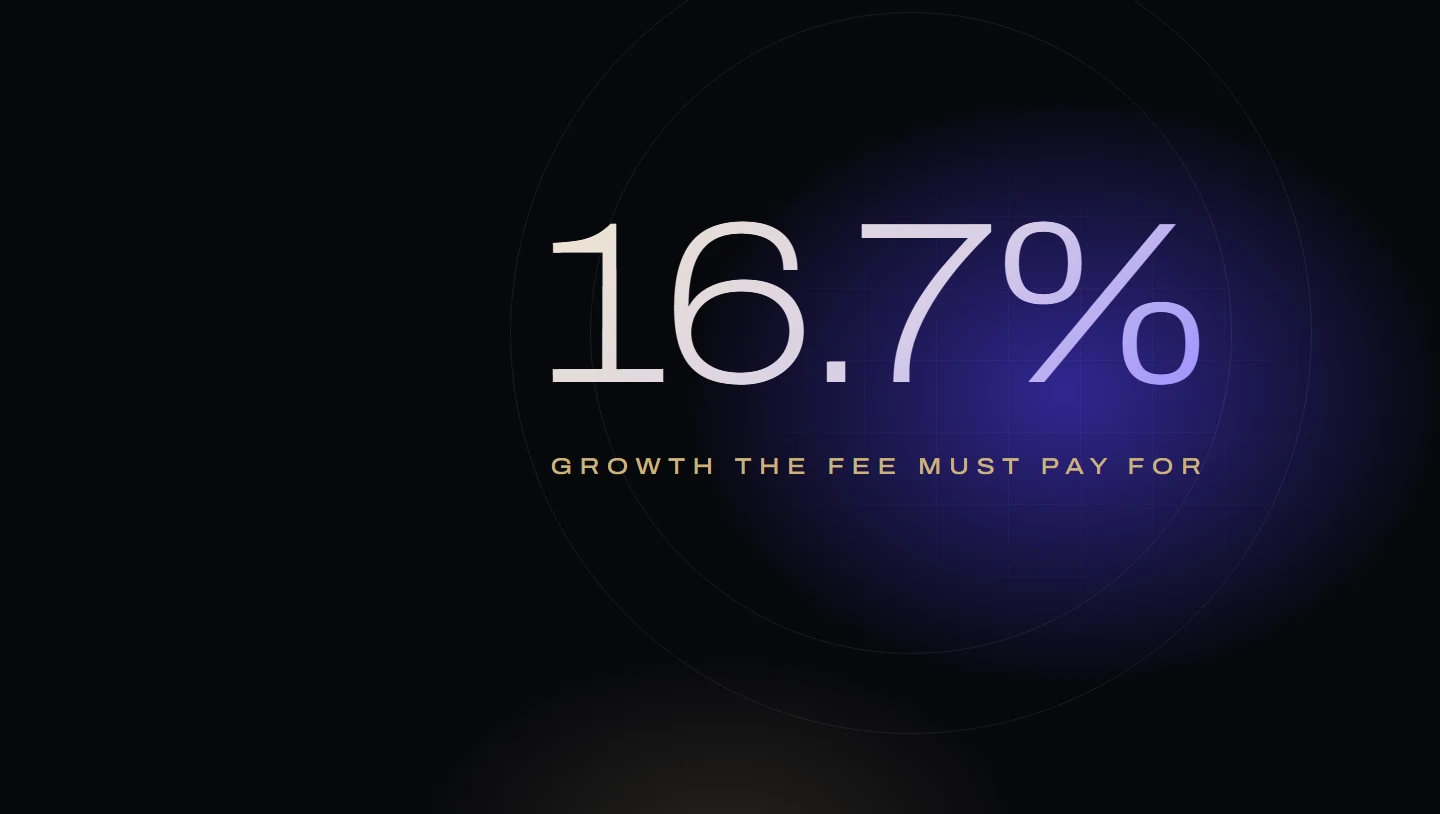
- 16.7%
- Growth a £3,000 monthly cost needs on £120,000 of monthly sales at a 15% margin on extra sales (worked example)
- 6
- Questions the page answers: do nothing, the ask, break-even, scenarios, payback and stop rules
- Month 6
- When the worked example's middle scenario pays back, with growth ramping up over three months
- 3
- Scenarios, each with what has to be true for it to happen
From Robert Prime and the Mr. Prime team, who manage Amazon advertising for founder-led UK and European brands: £2.5m of ad spend across our client accounts in the last 12 months. We build this page with prospects whose budget is signed off by someone else.
If you run Amazon for a brand, you have probably been here. You can see what needs doing, you have found the help, and someone else has to approve the money: an owner, a board, a finance director. The proposal you send them was written to impress you. It is full of features, case studies and percentages. They read it, ask “and what do we get back?”, and it stalls.
We see this from the other side. Some of our slowest deals, and some we lost, stalled at exactly this point. One prospect’s head of marketing needed a report they could take to their boss, and went quiet without one. Another had to convince owners who had been burned by agencies before, and signed about five months later, once we offered a smaller first step.
We also see what happens when the case is never made properly. In our experience, when an agency relationship breaks down, the commonest reason is that the results didn’t justify the fee, and the expectation was usually set at the sale, when nobody wrote down what the fee had to earn. A good business case protects you, your finance director and the agency.
So here is the page. It works for any Amazon spend: an agency, a freelancer, a new hire or a pilot. It is written for UK brands, in pounds.
The six questions on the page
What the page answers, in this order
- What happens if we do nothing?Last year’s sales and profit, and the trend you would expect anyway.
- What exactly are we asking for?The monthly cost, the term, and what it covers.
- What must it earn to break even?The growth the cost needs to pay for itself.
- What could happen?Three scenarios, each with what has to be true.
- When does it pay back?The month cumulative extra profit covers the cost.
- When do we stop?One agreed number, how it is measured, and the stop rules.
What happens if we do nothing?
Finance teams don’t compare a proposal with zero. They compare it with what would happen anyway. HM Treasury’s short guide for assessing public-spending business cases makes the same point: the shortlist “should include the do nothing or the do minimum option"2. Its logic works just as well for a brand.
For Amazon, the do-nothing line is:
- Total sales for the last 12 months, month by month, from Business Reports. Use ordered product sales, which Amazon calculates by “multiplying the price of order items and the number of units sold"3. Not ad-attributed sales.
- The trend. If sales grew 10% last year with no change in how you run the account, assume something like that continues. Growth you would have had anyway is not growth the spend bought.
- Seasonality. Mark your peak months. A pilot that runs through November will look brilliant against September for reasons that have nothing to do with the work.
- Today’s profit after advertising. Sales minus cost of goods, Amazon’s fees, VAT and ad spend. If you don’t know it, work it out first. Note your TACoS too: total advertising cost as a share of all sales, not just ad sales. The Profit X-Ray shows the TACoS your margin can afford.
What exactly are we asking for?
One line, with no room for misreading: the monthly cost, before and after VAT, for how many months, and what it includes. Put any one-off cost (set-up, audit, photography) on its own line and spread it over a year in the sums below, so it isn’t hidden.
What must it earn to break even?
This is the line a finance director looks for first.
Break-even growth
Monthly cost ÷ (monthly sales × margin on extra sales)
Margin on extra sales is what you keep from each extra £1 of sales after cost of goods, Amazon’s fees, VAT and the extra advertising those sales need. It is lower than your gross margin.
If that number looks out of reach for your account, stop here. The case is “no”, and that’s a useful answer. Our agency pricing guide explains how to pick the right margin and spread one-off costs.
What could happen? Three scenarios, each with what has to be true
Agency proposals usually show one number, the good one. Give your finance director three, and for each one write down what has to be true in terms they can check in Seller Central later. Amazon’s Business Reports give you the parts: sales are sessions × unit session percentage (conversion) × average selling price3.
Growth here means growth above the do-nothing line, not above zero. Here is the worked example, at full speed (from month three onwards), for a brand whose sales were flat on last year:
| Scenario | Growth | Extra sales a month | Extra profit a month | After the £3,000 cost |
|---|---|---|---|---|
| Low | 8% | £9,600 | £1,440 | −£1,560 |
| Middle | 20% | £24,000 | £3,600 | +£600 |
| High | 35% | £42,000 | £6,300 | +£3,300 |
| Scenario | What has to be true (sessions and price held flat) |
|---|---|
| Low | Conversion up from 10.0% to 10.8% |
| Middle | Conversion up from 10.0% to 12.0% |
| High | Conversion up from 10.0% to 13.5% |
Three rules keep this honest:
- Never stack lifts. A proposal that adds “+12% click-through” to “+8% conversion” to “+15% traffic” and calls it 40% growth has multiplied its optimism. One lever, one range, and a written reason for each. That is the rule we work to on every audit, and it is why all three scenarios above move conversion only. HM Treasury asks for the same discipline in its own way: an allowance for “Optimism Bias” in every business case2.
- Say what would change the answer. Treasury calls these “switching values”: the values at which a key variable would change the decision2. Break-even growth is exactly that. Put it next to the scenarios so the reader can see how far each one is from it.
- Every number needs its working. The fastest way to lose a sceptical reader is a figure with no sum behind it. Prospects have turned down early proposals of ours for exactly that, and they were right to.
When does it pay back?
Growth doesn’t arrive on day one, but the cost does. Show the months. In the worked example, growth ramps up evenly over the first three months.
| Month | Middle scenario: extra profit | After the £3,000 cost | Running total |
|---|---|---|---|
| 1 | £1,200 | −£1,800 | −£1,800 |
| 2 | £2,400 | −£600 | −£2,400 |
| 3 | £3,600 | +£600 | −£1,800 |
| 4 | £3,600 | +£600 | −£1,200 |
| 5 | £3,600 | +£600 | −£600 |
| 6 | £3,600 | +£600 | £0 |
The middle scenario pays back in month 6, and over the first 12 months it leaves the business £3,600 better off. The high scenario pays back in month 2 and leaves £33,300. The low scenario never pays back and loses £20,160 over the year. Put all three on the page.
Your finance director will compare the payback month with their own target. An ACCA study article on payback notes that “an organisation may have a target payback period, with any project taking longer than the target period being rejected"1. Ask what the target is before you build the case.
When do we stop? The pilot and the stop rules
The easiest yes for a finance director is a small, dated test with the exit written in. We suggest:
- About 90 days. The first 30 for changes, the last 30 measured.
- A defined set of products, chosen from the ones with the biggest gap, not the whole catalogue.
- One number both sides sign on day one, set in pounds and at or above break-even. In the worked example the middle scenario is £24,000 of extra sales a month, against £20,000 to break even. So the pass mark is: the pilot products sell at least £24,000 more in days 61 to 90 than in the same 30 days last year, with TACoS at or under an agreed ceiling. Setting it in pounds means it doesn’t matter whether the pilot covers ten products or the whole account. A pass mark below break-even approves a loss.
- Measured in your own Seller Central, with the report attached to the result.
- Stop rules, agreed in advance. For example: stop if the pilot products are below last year at day 60, if TACoS runs above the ceiling for two weeks in a row, or if the named person running the account changes without notice.
- What you keep if you stop: the listings, campaigns, keyword lists and reports.
Be straight about one thing: a pilot proves the rate, not the payback. In the worked example, a pilot that hits the middle scenario is still about £1,800 behind at the end of month 3, and only catches up in month 6. Agree in advance that passing the pilot means carrying on to at least month 6. Otherwise the finance director is approving a number that was always going to look like a loss at day 90.
The template
Copy this into a document and fill it in. Every line should be checkable by someone who wasn’t in the meeting.
| Section | What to write | Worked example |
|---|---|---|
| The decision | What you are asking for, in one sentence | £3,000 a month plus VAT for a 90-day pilot, then month by month |
| Do nothing | Last 12 months’ total sales and profit after ads, the trend, peak months | £120,000 a month, flat on last year, peak in November and December |
| The cost | Monthly cost, one-off costs spread over 12 months, VAT | £3,000 a month, no set-up fee |
| Break-even | Monthly cost ÷ (monthly sales × margin on extra sales) | £3,000 ÷ (£120,000 × 15%) = 16.7% |
| Alternatives | Every other way to get the same result, including doing it in-house | Hire an Amazon manager; a freelancer for ads only; an agency; do nothing |
| Scenarios | Low, middle and high growth, with extra profit after the cost | 8%, 20%, 35%: −£1,560, +£600, +£3,300 a month |
| What has to be true | The one change behind each scenario, in a number you can check | Middle: conversion from 10.0% to 12.0%, sessions and price flat |
| Payback | Month the running total reaches zero, for each scenario | Low: never. Middle: month 6. High: month 2 |
| The pilot | Products, dates, the one number, how it is measured | 10 products; days 61 to 90 at least £24,000 above the same 30 days last year, from Business Reports |
| Stop rules | What makes you stop, and what you keep if you do | Below last year at day 60, or TACoS over the ceiling for two weeks |
| Risks | Stock, seasonality, price changes, team time | Stock cover on the pilot products must stay above 8 weeks |
The agency ROI calculator works out the break-even, payback month and extra profit for you, and what that profit adds to the value of the business if you sell it.
Traps that sink the case
- Comparing with zero. If the business was growing anyway, the spend only gets credit for growth above that.
- Using ad-attributed sales. Amazon credits a sale to an ad only within a set window after the click (our agency pricing guide gives the details). Ad sales can rise while total sales stand still. Use total sales and profit after advertising.
- Using gross margin. Extra sales usually need extra advertising, so the margin on them is lower than your average.
- Ignoring the ramp. A scenario that assumes full growth from month one shows a payback months earlier than it will really come. In the worked example, the middle scenario would look as if it paid back in month one instead of month six.
- Forgetting your team’s time. If someone in-house has to brief, approve and supply stock for the work, that time is part of the cost.
If you want help building this page for your account, it is what we produce at the end of a Profit Audit: your own baseline, your own break-even, and the scenarios with their workings. Our How we measure page sets out the rules behind every £ we show you.
Frequently asked questions
What should an Amazon business case include?
How do I work out the return on an Amazon agency?
What payback period will my finance director accept?
Should I use ad-attributed sales in the business case?
How long should an Amazon pilot be?
What if the business case says no?
Sources
- Payback and discounted payback. ACCA (Association of Chartered Certified Accountants). Checked 24 October 2026.
- Assessing business cases: a short plain English guide. HM Treasury (for teams assessing public-spending proposals). Checked 24 October 2026.
- Business reports glossary. Amazon Seller Central UK. Checked 24 October 2026.
How this guide was made
Written by Robert Prime and reviewed by Stephen Harrison at Mr. Prime, which is itself an Amazon agency: read it with that in mind. We used AI tools to help research and draft it; Robert edited it and takes responsibility for it. The finance principles are quoted from ACCA and HM Treasury, and Amazon’s report definitions from its UK help pages, all read on 24 October 2026. The worked example uses invented figures, and the fee in it is an illustration, not our price.
Every figure above links to the primary source it came from, and we recheck them when Amazon changes its fees or definitions. Read our editorial standards. Spotted something wrong? Tell us through our contact page and we will correct it and note the change here.
About the author
Robert Prime
Robert has spent more than two decades building, growing and selling online businesses, including an Amazon brand he built and sold for seven figures.
His other exits include Telematics.com, sold to LexisNexis, and Remortgage.com. He co-owned UpDownDesk.com.au, growing it on Shopify alone from £12k to £350k a month before he exited, one of more than six Shopify businesses he has built and sold.
He sets and reviews the strategy for every Mr. Prime client, with the view of an operator who has sat on your side of the table.

Reviewed by
Stephen Harrison
Fourteen years a police officer, then his own Amazon brands. Now runs more client accounts than anyone, meticulously.
Your numbers, not ours
See your own break-even, TACoS and profit after ads.
The Profit X-Ray works it out from four monthly figures, or from your Business Report, in your browser.